Bee Removal Melbourne — When a Passing Swarm Becomes a Permanent Home
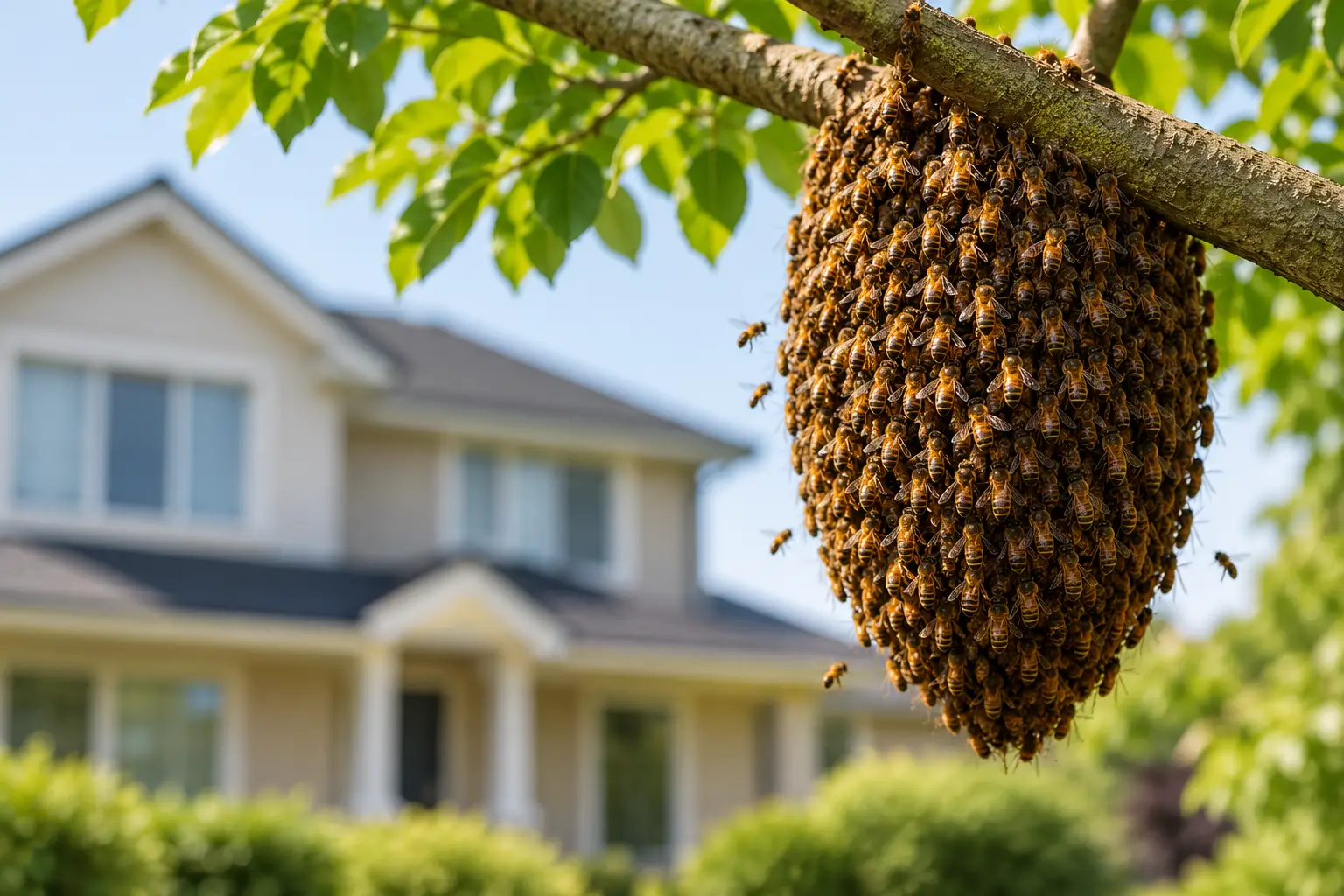
For many people, seeing hundreds of bees gathered on a tree branch, fence, letterbox, or roofline is an alarming experience. The immediate assumption is usually the same: a hive has appeared overnight and the bees have chosen the property as their new home.
Interestingly, that assumption is often incorrect.
One of the first things experienced pest professionals learn is that not every large group of bees represents an established colony. In many cases, what people are seeing is a swarm that is simply passing through. It may remain in the same location for only a few hours, or occasionally for a day or two, before moving on entirely.
The challenge is knowing the difference.
At Recon Pest Control, many enquiries about Bee Removal Melbourne begin with uncertainty rather than urgency. Property owners are often less concerned about the bees themselves than they are about what the bees intend to do next. Are they resting temporarily, or have they already decided to stay?
Understanding that distinction is one of the most important parts of managing bee activity safely and responsibly.
Every Permanent Hive Starts With Movement
Contrary to popular belief, bees rarely establish a new colony without first going through a period of relocation.When an existing colony becomes overcrowded or environmental conditions change, part of the colony leaves with a queen to search for a suitable location. This event, known as swarming, is a completely natural part of the bee life cycle.
To people watching from the ground, it can appear dramatic. Thousands of bees may suddenly fill the air before settling together in a dense cluster. Although this behaviour often causes concern, the swarm itself is usually focused on finding a permanent home rather than interacting with people.
During this stage, Bee Removal Melbourne decisions require careful assessment rather than immediate action. A swarm resting temporarily behaves very differently from bees that have already begun establishing a permanent hive.
Understanding where the swarm is in that journey helps determine the most appropriate response.
Why Bees Pause Before Choosing a Home
Many people wonder why a swarm settles on a tree branch or fence instead of flying directly to its new destination. The answer lies in how bees search for suitable nesting locations.
While the swarm remains together in a temporary cluster, scout bees begin exploring the surrounding area. Their role is to inspect potential nesting sites and return with information about each location. Factors such as shelter, protection from weather, internal space, and long-term security all influence their decision.
This temporary pause may last only a few hours, but it can also continue for longer depending on environmental conditions. From a distance, the bees appear settled. In reality, they may simply be waiting while the search continues.
At Recon Pest Control, understanding this behaviour is an important part of Bee Removal Melbourne because it helps distinguish temporary swarming from the early stages of permanent colony establishment.
When Temporary Becomes Permanent
Not every swarm leaves. If scout bees discover a suitable location nearby, the entire colony gradually relocates into that space and begins building a permanent hive.
Unfortunately for property owners, many buildings provide exactly the type of environment bees naturally seek. Roof cavities remain dry throughout the year. Wall voids offer protection from predators and changing weather. Chimneys, sheds, garages, and unused structural cavities provide enclosed spaces where colonies can grow with minimal disturbance.
From the outside, very little changes. The bees disappear from the temporary cluster, and people often assume the problem has resolved itself. In reality, the colony may simply have moved into the structure itself.
This transition is one of the most common observations during Bee Removal Melbourne inspections. What initially appeared to be a harmless swarm can become an established hive if suitable nesting conditions exist nearby.
Why Some Buildings Are More Attractive Than Others
Bees are remarkably selective when choosing a permanent nesting site. Warmth is important, but it is rarely the only factor.
A suitable location must also provide protection from wind and rain, sufficient internal space for the colony to expand, and an entrance that allows bees to move efficiently while remaining protected from predators. Many Melbourne properties unintentionally provide these conditions.
Older homes may contain small structural gaps leading into roof cavities. Renovations sometimes create concealed voids that remain undisturbed for years. Decorative cladding, unused chimneys, retaining walls, and garden structures can all become attractive nesting locations.
During Bee Removal Melbourne assessments, Recon Pest Control often finds that property owners were completely unaware of these access points until bee activity revealed them. The bees are not attracted to the house itself.
They are responding to the conditions the structure provides.
Why People Often Notice Bees Too Late
One of the more interesting aspects of bee behaviour is how quietly permanent colonies establish themselves. Unlike rodents scratching in ceilings or possums moving through roof spaces, bees often create very little disturbance during the early stages of colony development.
A few bees entering and leaving the same location may be the only visible sign for weeks. Because activity appears organised and predictable, many people assume the bees are simply passing through.
Over time, however, the number of worker bees gradually increases. Flight paths become more noticeable. Regular movement around rooflines, vents, or wall cavities becomes easier to observe. By this stage, the colony has often become well established.
This gradual progression explains why Bee Removal Melbourne is frequently requested weeks after the colony first arrived rather than during the initial swarm.
Why Every Bee Situation Needs Individual Assessment
One of the biggest mistakes people make is assuming that every bee situation should be handled in exactly the same way. In reality, no two situations are identical.
The species involved, the location of the hive, accessibility, surrounding environment, nearby pedestrian activity, and the potential risk to occupants all influence the most appropriate management approach.
A temporary swarm resting in a tree presents different considerations from an established hive inside the wall of a childcare centre. Likewise, a colony located in a rarely used outbuilding creates different priorities than one positioned directly above the entrance to a busy family home.
This is why Recon Pest Control approaches Bee Removal Melbourne by assessing each situation individually rather than applying the same response to every call-out.
The objective is not simply to remove bees. It is to determine the safest, most appropriate solution based on the circumstances.
Why Acting Too Quickly Can Sometimes Make the Situation Worse
Discovering a swarm of bees naturally creates concern, especially when children, pets, or customers regularly use the area. The instinctive response is often to make the bees leave as quickly as possible.
However, acting without understanding what is happening can sometimes create greater risks than the bees themselves. Attempting to disturb a swarm with water, smoke, insect sprays, or physical objects can change the bees’ behaviour dramatically.
A colony that was previously calm may become defensive if it perceives a threat. Even when people are trying to help, unnecessary disturbance often complicates what may have been a manageable situation.
One of the first priorities during Bee Removal Melbourne is understanding whether immediate intervention is actually necessary or whether the situation should first be assessed properly. Recon Pest Control regularly advises property owners that observation and professional evaluation usually lead to better outcomes than reacting purely out of concern.
Why DIY Bee Removal Rarely Solves the Whole Problem
Many online videos make bee removal appear straightforward. A person sprays an opening, removes a visible cluster, and the problem seems to disappear. Real situations are rarely that simple.
Visible bees are only one part of an established colony. If bees have already occupied a wall cavity, roof space, chimney, or another concealed location, simply removing the insects that can be seen often leaves behind parts of the hive that continue attracting activity. Honey, wax, brood, and remaining bees may create ongoing issues even after the visible swarm has disappeared.
This is one reason why Bee Removal Melbourne involves more than simply removing bees from sight. The surrounding conditions also need to be considered to reduce the likelihood of continued activity in the same location.
At Recon Pest Control, every assessment focuses on understanding the complete situation rather than only the most obvious symptoms.
How Melbourne’s Weather Influences Bee Behaviour
Bee activity changes throughout the year, and Melbourne’s climate plays an important role in those seasonal patterns.
Warmer spring conditions often coincide with increased swarming activity as healthy colonies begin expanding. During summer, established colonies remain highly active while taking advantage of abundant flowering plants and food sources across the city.
As temperatures begin to cool, bee behaviour changes again. Colonies become more focused on protecting existing resources rather than expanding into new locations. Environmental conditions such as rainfall, prolonged heat, and seasonal flowering cycles also influence where bees forage and how frequently they move around residential and commercial properties.
Understanding these seasonal patterns is an important part of Bee Removal Melbourne because timing often provides valuable context. What appears unusual in one season may be entirely consistent with normal bee behaviour in another.
Why Established Hives Should Never Be Ignored
One question occasionally asked by property owners is whether a hive can simply be left alone if it is not causing immediate problems. The answer depends entirely on the location.
A colony established high in a tree away from regular human activity presents different considerations from a hive inside the wall of a family home or above the entrance to a commercial building.
As colonies grow, the number of worker bees increases, flight paths become busier, and interactions with people become more likely. Areas that were once rarely used may later become part of everyday activity, increasing the potential for accidental disturbance.
During Bee Removal Melbourne assessments, Recon Pest Control evaluates not only the bees themselves but also how the location affects the level of risk for occupants, neighbours, visitors, and pets. Understanding the surrounding environment is often just as important as understanding the colony.
What Recon Pest Control Commonly Observes Across Melbourne
After attending bee call-outs across Melbourne, certain patterns become familiar.
Many enquiries begin with uncertainty rather than panic. Property owners often recognise increased bee activity but are unsure whether they are looking at a temporary swarm, an established hive, or simply normal foraging behaviour.
Another common observation is that bees frequently choose locations people rarely inspect. Roof cavities, wall voids, garages, sheds, pergolas, retaining walls, and unused chimneys regularly provide the protection colonies seek.
Recon Pest Control also finds that many colonies remain unnoticed until surrounding activity changes. Renovation work, roof maintenance, gardening, or warmer seasonal weather often draws attention to bee activity that had already existed for some time.
These experiences reinforce an important principle of Bee Removal Melbourne: every situation deserves individual assessment because appearances alone rarely tell the complete story.
Can Properties Reduce the Likelihood of Future Bee Activity?
No property can eliminate the possibility of bees visiting.
Bees play an essential role in the natural environment and regularly travel significant distances while searching for nectar, pollen, and suitable nesting locations. Their movement through suburban Melbourne is entirely normal.
However, certain property conditions can influence whether a temporary visit develops into a permanent colony.
Small structural gaps leading into roof spaces, unused wall cavities, damaged vents, deteriorating exterior timber, and concealed voids can all provide attractive nesting opportunities. Routine building maintenance helps reduce these opportunities by limiting access to protected internal spaces.
Recon Pest Control often explains that Bee Removal Melbourne is not only about managing existing colonies but also about recognising the conditions that make a property attractive in the first place. Small maintenance improvements made today can significantly reduce future nesting opportunities.
Understanding the Difference Between Seeing Bees and Having a Bee Problem
Not every bee sighting indicates that something is wrong. Individual bees visiting flowering plants, gardens, or outdoor entertaining areas are simply performing their natural role as pollinators. Even occasional groups of bees moving through a property may be part of normal seasonal activity.
The situation changes when bees consistently enter and leave the same structural location, when large numbers remain in one place for extended periods, or when normal use of the property becomes affected.
Understanding this distinction helps property owners respond appropriately instead of assuming every bee sighting requires immediate intervention.
One of the goals of professional Bee Removal Melbourne is to provide clarity. Sometimes that means confirming that the activity is temporary. Other times it means identifying a developing colony before it becomes a larger issue. Either way, informed decisions produce better outcomes than assumptions.
The Right Decision Is Different for Every Property
Every bee situation begins with the same question. “What exactly are the bees doing?”
Until that question is answered, it is impossible to know whether the most appropriate response is observation, monitoring, or active management.
The species involved, the location of the colony, accessibility, surrounding environment, nearby pedestrian activity, and safety considerations all influence the decision. What works for one property may not be suitable for another only a few streets away.
This is why experienced Bee Removal Melbourne professionals avoid making assumptions based on photographs or brief descriptions alone. A proper assessment provides the context needed to determine the safest and most appropriate course of action.
At Recon Pest Control, every property is approached with that understanding. Rather than treating every bee enquiry as identical, each situation is assessed on its own merits so recommendations reflect the actual conditions present at the site.
Ultimately, successful bee management is not about reacting to the sight of bees. It is about understanding where they are in their journey—from a passing swarm to a permanent hive—and making informed decisions that protect both people and property.
Frequently Asked Questions About Bee Removal Melbourne
Large groups of bees are often the result of swarming, which is a natural process where part of an existing colony leaves to establish a new home.
A temporary swarm usually forms a cluster and may move within hours or days. Bees consistently entering and leaving the same structural opening often indicate an established hive.
DIY removal is not recommended. Disturbing bees without understanding the situation can increase the risk of defensive behaviour and may not resolve the underlying problem.
No. Some swarms move on naturally, while others establish permanent colonies. Professional assessment helps determine the most appropriate response.
These locations provide shelter from weather, protection from predators, stable temperatures, and enough space for colony development.
Yes. Seasonal temperatures, rainfall, and flowering conditions all influence swarming, foraging, and colony activity throughout Melbourne.
If favourable nesting conditions remain, future bee activity is possible. Addressing structural access points can help reduce long-term risk.
No. Bees are generally focused on protecting their colony and gathering food. Defensive behaviour is more likely when a colony feels threatened or disturbed.
Professional assessment is recommended when bees remain in one location for an extended period, are entering a structure, or are creating safety concerns around homes or businesses.
Recon Pest Control assesses every bee situation individually, considering species, location, accessibility, and safety before recommending the most appropriate management approach for the property.
Why choose Recon Pest Control for Termite Control Melbourne?
Recon Pest Control combines practical field experience with a long-term approach to termite management. By understanding the relationship between termite behaviour, environmental conditions, and property design, we help homeowners and businesses protect their properties well beyond the initial treatment.