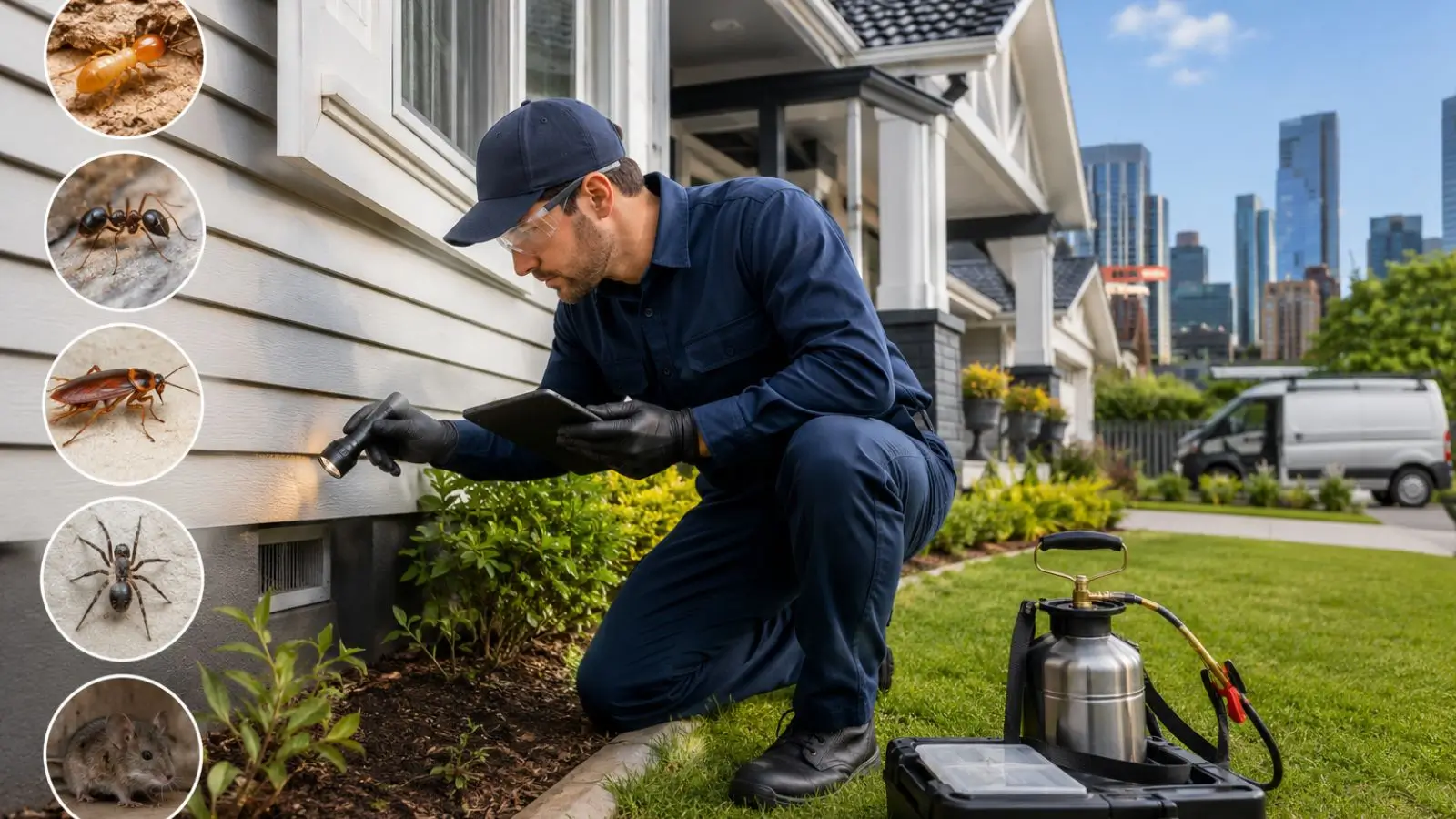
Two homes can sit side by side in the same Melbourne street, built around the same time, exposed to the same weather conditions — yet only one ends up with a termite problem.
From the outside, there’s no obvious difference. Both look well maintained. Both appear structurally sound. But one of them has already been selected.
At Recon Pest Control, this pattern shows up more often than people expect. When homeowners call for a Termite Inspection Melbourne, it’s usually because something feels off — not necessarily because damage is obvious. And in many cases, the inspection reveals that termite activity began long before anything visible appeared.
The question is not just how termites get in. It’s why they choose one property over another.
Why Termites Don’t Spread Randomly
There’s a common assumption that termites simply “spread” across an area and eventually reach every home. In reality, termite movement is far more selective.
Termites operate based on survival efficiency. They are constantly searching for environments that allow them to access timber while remaining protected from exposure. That means they are drawn toward specific conditions, not just proximity.
So when one home is affected and the next isn’t, it’s usually because one structure unknowingly offers a more stable environment.
During a typical Termite Inspection Melbourne, Recon Pest Control often finds that the difference isn’t visible from the outside. It’s hidden in moisture levels, soil conditions, or structural design.
What Attracts Termites to a Property
Termites are not attracted to houses in general. They are attracted to the conditions within those houses.
Moisture is one of the biggest factors. Even minor, consistent dampness creates a suitable environment. This can come from leaking pipes, poor drainage, or areas where water collects near the foundation.
Timber exposure is another key element. This doesn’t always mean visible wood. Subfloor framing, door frames, skirting boards, and even structural supports can become access points.
Then there’s soil contact. When timber elements are close to or touching soil, it creates a direct pathway for termites to enter without exposure.
In many Termite Inspection Melbourne cases, the issue isn’t neglect — it’s design. Certain structures simply make access easier without the homeowner realising it.
Why Melbourne Conditions Increase Termite Risk
Melbourne’s environment plays a significant role in termite behaviour.
The soil retains enough moisture to support subterranean termite activity. Seasonal changes don’t eliminate colonies — they only shift their behaviour. During cooler periods, termites move deeper into soil or further into structures where temperature remains stable.
Urban development also contributes. As land is cleared and built upon, termite colonies are displaced. Instead of disappearing, they relocate — often into nearby structures.
Recon Pest Control frequently encounters this pattern during Termite Inspection Melbourne work in developing suburbs, where new construction has disturbed existing termite habitats.
This is why termite risk is not limited to older homes. Newer properties can be just as vulnerable if conditions allow it.
How Termites Enter Without Being Seen
One of the most misunderstood aspects of termite activity is how invisible it is.
Termites rarely expose themselves. Instead, they travel through mud tubes or hidden pathways that protect them from light and air. These tubes can run along walls, foundations, or inside structural voids.
In many cases, entry points are no larger than a crack in concrete or a gap around plumbing.
During a Termite Inspection Melbourne, it’s common to find that termites have been active inside walls or subfloors without any visible external signs.
By the time damage appears on the surface, the activity has often been present for months or longer.
Why Damage Is Discovered Too Late
Termite damage doesn’t usually present itself dramatically.
It starts internally. Timber is consumed from the inside out, leaving outer surfaces intact. This creates the illusion that everything is fine — until structural integrity is compromised.
Homeowners often discover damage accidentally. A hollow sound when tapping wood. A door frame that suddenly weakens. Paint that begins to bubble without explanation.
At Recon Pest Control, many Termite Inspection Melbourne calls happen after these subtle signs appear. And in most cases, the inspection reveals that the damage began long before those signs were noticed.
The issue isn’t that termites act quickly. It’s that they act quietly.
What a Termite Inspection Melbourne Actually Reveals
A proper inspection is not about finding termites directly. It’s about identifying the conditions that support them.
This includes:
- Areas of moisture accumulation
- Structural vulnerabilities
- Evidence of past or current activity
- Points where timber is exposed or accessible
- Early-stage indicators that are easy to miss
During a Termite Inspection Melbourne, Recon Pest Control focuses on patterns rather than isolated signs. It’s rarely a single indicator that confirms activity — it’s the combination.
This is why inspections often uncover issues that were not visible to the homeowner.
Why Some Inspections Miss the Problem
Not all inspections are equal.
Surface-level checks may identify obvious signs, but they often miss early-stage activity or hidden access points.
Termite behaviour requires interpretation. Understanding how they move, where they nest, and how they respond to environmental conditions makes a significant difference in detection.
At Recon Pest Control, experience plays a role in how inspections are conducted. Knowing where to look — and more importantly, where people usually don’t look — changes what gets found.
In Termite Inspection Melbourne, missed details often lead to delayed detection, which increases the extent of damage over time.
How Inspection Changes the Outcome
One of the biggest differences between early and late termite detection is cost.
When activity is identified early, intervention is simpler and damage is limited. When detection happens late, structural repairs often become necessary.
But beyond cost, there is predictability.
Regular Termite Inspection Melbourne allows homeowners to understand the risk level of their property. Instead of reacting to damage, they can respond to early indicators.
Recon Pest Control often works with clients who initially requested a single inspection, only to realise the value of ongoing monitoring once the process is understood.
Why Skipping Inspections Leads to Bigger Problems
Termite activity does not resolve itself.
If conditions remain favourable, colonies continue to expand. What begins as minor internal damage can develop into structural issues over time.
Skipping inspections doesn’t reduce risk — it delays awareness.
Many homeowners assume that absence of visible damage means absence of activity. In termite behaviour, that assumption is often incorrect.
In Termite Inspection Melbourne, the most significant findings are often the ones that haven’t yet become visible problems.
How Property Design Influences Termite Risk
Not all structures carry the same level of risk.
Homes with poor drainage, inadequate ventilation, or timber close to soil are more vulnerable. Landscaping can also play a role — garden beds against walls, excessive mulch, or retained moisture near foundations increase exposure.
Even renovations can introduce risk. Changes in structure, plumbing, or flooring can create new access points if not properly managed.
Recon Pest Control often identifies these factors during Termite Inspection Melbourne, especially in homes that have undergone modifications without considering termite pathways.
What Changes When a Property Is Properly Assessed
When termite risk is properly understood, decisions change.
Instead of reacting to visible damage, homeowners begin to manage conditions. Moisture is controlled. Structural vulnerabilities are addressed. Monitoring becomes part of maintenance rather than emergency response.
In Termite Inspection Melbourne, the goal is not just detection. It’s awareness.
Once that awareness is in place, the likelihood of unexpected damage reduces significantly.
Why Termite Inspection Melbourne Is About Understanding, Not Just Checking
An inspection is not a checklist.
It’s an evaluation of how a property interacts with its environment. It looks at conditions, patterns, and potential — not just current activity.
This is what makes termite inspection different from other pest services. It is predictive rather than reactive.
At Recon Pest Control, this approach is what allows termite risks to be identified before they become visible problems.
Common Questions About Termite Inspection Melbourne
Because certain properties provide better access to moisture, shelter, and timber.
Frequency depends on risk level, but regular inspections help detect activity early.
Yes. In most cases, they are active long before damage appears.
Yes. Construction does not eliminate risk — it can sometimes increase it.
Often there is no obvious sign. Subtle changes usually appear first.
Yes. In most cases, termite activity begins inside timber or structural areas that are not visible. External surfaces can remain intact while internal damage progresses.
Subfloors, wall cavities, and areas with consistent moisture are the most common starting points. These locations are rarely checked during day-to-day use, which is why early activity often goes unnoticed.
No. Treatment reduces risk but does not eliminate the possibility of future activity. Conditions around the property can change over time, which is why ongoing termite inspection in Melbourne remains important.
Termites remain active throughout the year, but their movement patterns change with temperature and moisture levels. Warmer conditions may increase visible activity, but infestations often begin earlier.
Yes. Changes to flooring, plumbing, landscaping, or ventilation can create new entry points or moisture conditions. Properties that have been modified should be reassessed through a termite inspection in Melbourne.
Termites can remain active for months or even years before visible signs appear. Their ability to stay hidden is one of the main reasons inspections are necessary even when no obvious damage is present.